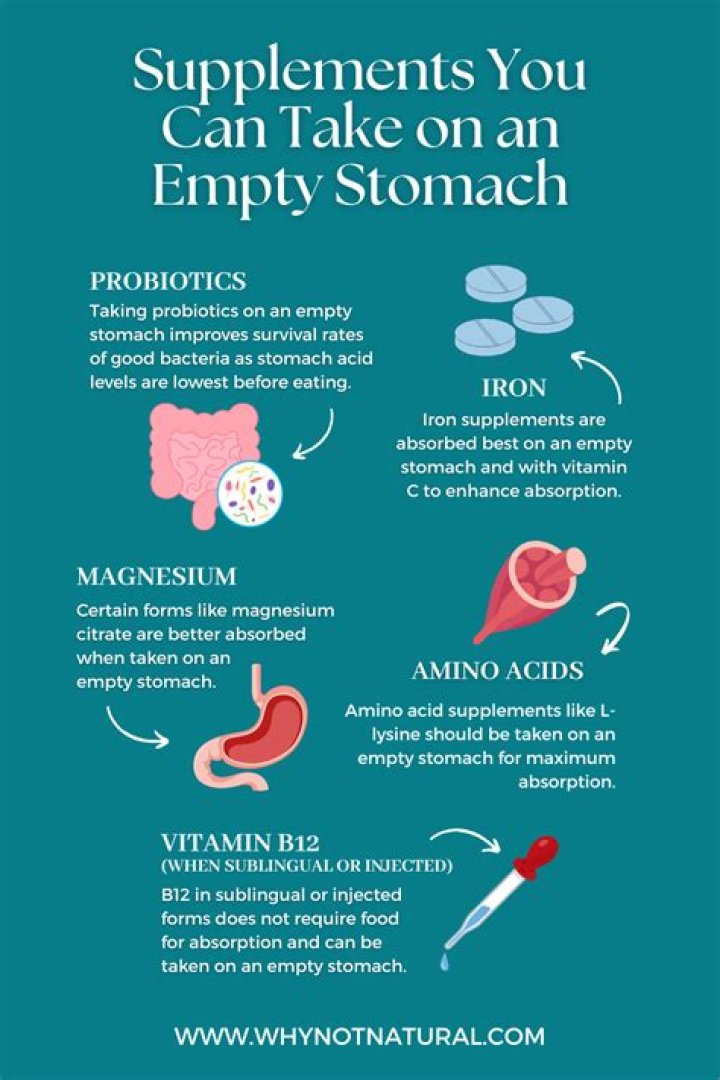
When it comes to vitamins and supplements, reaping maximal benefits is not only about what you take, but also about how. For instance, your doctor might recommend taking certain supplements at a particular time of day, or they may instruct you to take them with or without other supplements or medications. Similarly, your doctor may advise you to take supplements with food or on an empty stomach. The best way to find out is to share the full list of what you're taking with your doctor or pharmacist.
However, there's a handful of very common supplements that should never be ingested on an empty stomach. Taking them the wrong way can render them useless or even harmful, experts say.
"By taking these supplements with food, you can maximize their absorption and minimize the risk of adverse effects," says Jana Abelovska, MPharm, superintendent pharmacist at Click Pharmacy.
She adds that you should always consult with a healthcare professional before starting any new supplement regimen to ensure it's appropriate for your individual needs. That said, these are the four supplements that should always be paired with a meal.
RELATED: 12 Supplements You Should Never Take Together, Medical Experts Say.
1 Fat-Soluble Vitamins (A, D, E, K)
When you're taking vitamins, it's important to distinguish between those that are water-soluble and those that are fat-soluble. Though water-soluble vitamins can be taken on an empty stomach, fat-soluble vitamins need dietary fat to be broken down, absorbed, and ultimately stored in body fat tissue and the liver. Taken without food, they tend to be far less effective.
"Think of your body as a high-performance sports car," suggests Yousef Elyaman, MD, IFMCP, a board-certified internist and medical director at the supplements company Humann. "Those fat-soluble vitamins are like premium gasoline. But to really rev up the engine, you'll need to combine them with food. This is because they rely on dietary fats to be fully absorbed and to propel your health forward."
2 Multivitamins
Many people take multivitamins to help fill in nutritional gaps in their diets. These should also be taken with food because they nearly always contain a combination of water-soluble and fat-soluble vitamins.
Elyaman adds that some people experience increased side effects from multivitamins when taken on an empty stomach. It's not uncommon to experience a stomach ache or stomach upset if you take multivitamins without food, he notes.
RELATED: 5 Supplements That Can Damage Your Kidneys, Doctors Say.
3 Coenzyme Q10
Coenzyme Q10, often called CoQ10, is an antioxidant supplement that's used to protect against cellular damage. In particular, this supplement "helps with migraines, heart failure, and high blood pressure," the Cleveland Clinic writes.
Elyaman says that while CoQ10 can play a "vital role" in heart health, you'll need to take it with food in order to see results. "Since it's fat-soluble, pairing it with a meal helps ignite its full benefits," he says.
4 Calcium carbonate
If you take a calcium supplement, it's important to know which kind you're taking—the two main types being calcium carbonate and calcium citrate.
If you take calcium carbonate, it's important to take this with food, the Mayo Clinic says. "The acid the stomach makes while eating helps the body absorb calcium carbonate," their experts write. Meanwhile, calcium citrate can be taken with or without food.
However, some people may find that taking both types with a meal comes with benefits. "Taking calcium with food also reduces the risk of gastrointestinal side effects, such as constipation," says Abelovska.
Lauren Gray Lauren Gray is a New York-based writer, editor, and consultant.Read moreFiled UnderHealth Advice • Health FactsSources referenced in this article- Source: Cleveland Clinic: Coenzyme Q10 Capsules and Tablets
- Source: Mount Sinai: Coenzyme Q10
- Source: Mayo Clinic: When should I take calcium supplements? Does it matter what time?
5 Supplements That Can Damage Your Kidneys
Don't assume they're safe just because they're natural.March 21, 20242 Supplements Can Boost Your Brain Function
Researchers say these plant fibers are effective and affordable.March 5, 2024Man Killed by Vitamin D Supplements
A 89-year-old from the UK has died after taking vitamin D supplements for months.March 1, 20244 Best Supplements to Take for Allergies
Here's how to soothe your seasonal symptoms.March 1, 2024Vitamin B3 Could Spike Heart Disease Risk
Also called niacin, this vitamin is added to several processed foods.February 22, 20247 Best Supplements to Take If You're Over 60
Here's what one Yale-trained doctor recommends.March 13, 202410 Supplements to Wake You Up in the Morning
These additions to your morning routine will make you feel ready for the day ahead.March 8, 2024Best and Worst Supplements for Heart Health
Few are helpful for heart health—and some do more harm than good.March 7, 20246 Pros and Cons of Taking a Daily Multivitamin
Here's your handy guide to making the right decision for you.March 24, 2024The 6 Worst Multivitamin Ingredients
Avoid adverse effects by taking only what you need.March 9, 2024