Magnesium is an essential mineral that's used in over 300 chemical reactions in the body, aiding in a range of important functions. It's naturally available in many foods, and most people will get enough magnesium through their diets. However, some people develop magnesium deficiencies when they cannot consume or retain enough dietary magnesium, either due to lifestyle factors, medications they take, or underlying health conditions.
Requesting a blood test from your doctor is the best way to determine whether or not you're deficient in magnesium. However, understanding how this mineral affects the body and knowing the most common low magnesium symptoms can be the first step in recognizing a problem before you alert your medical provider. Here's everything you need to know about your magnesium levels and whether you're getting enough, doctors say.
RELATED: 5 Supplements That Can Damage Your Kidneys, Doctors Say.
What Is Magnesium and How Does It Impact Our Bodies?
There are certain vitamins and minerals that your body simply can't live without. Magnesium is one such mineral.
"Magnesium is an element, much like sodium and calcium, which is crucial for keeping your body healthy," explains Richard Scanlan, MD, FCAP, a clinical pathologist and chairman of the College of American Pathologist (CAP) Council on Accreditation. "Magnesium is important for maintaining normal heart and lung functions and is also important for controlling blood pressure and other functions of the brain and nervous system."
The National Institutes of Health (NIH) adds that magnesium helps regulate blood sugar, muscle function, and the development of protein, bones, and DNA.
RELATED: 5 Side Effects of Taking Too Much Magnesium.
What Can Cause a Magnesium Deficiency?
If you consume or retain too little magnesium, this can lead to a range of magnesium deficiency symptoms. Most adult women need between 310 and 320 mg of dietary magnesium daily, while most adult men require between 410 and 420 mg, the NIH says.
"Everything always comes back to your diet, doesn't it?" Scanlan says. "If you are eating a high-fat diet filled with fried foods and sugar and you aren't including nuts, seeds, those leafy green vegetables, whole grains, and legumes, at some point, you may see a magnesium deficiency. Older folks who may not be able to cook as much may also have magnesium deficiencies."
The pathologist warns that you can also lose magnesium if you regularly drink too much alcohol since alcohol can impair magnesium absorption and cause frequent urination. Certain medical conditions—both acute and chronic—can lead to magnesium deficiency, as well.
"Chronic diarrhea can deplete magnesium levels along with kidney problems. If your kidneys aren't working properly, it can stop your body from reabsorbing magnesium. People dealing with uncontrolled diabetes can also lose magnesium," Scanlan explains. Additionally, people with gastrointestinal conditions who take proton pump inhibitors to reduce stomach acid are at higher risk of magnesium deficiency.
Daniel Landau, MD, a board-certified specialist in medical oncology, internal medicine, and hematology, and an expert contributor for The Mesothelioma Center, adds that it's not uncommon for people undergoing cancer treatment to develop this particular deficiency.
"In my work as an oncologist, many chemotherapies or other medicines can also lead to magnesium wasting. It is essential to replace magnesium when this occurs," he tells Best Life.
RELATED: 8 Signs You're Not Getting Enough Iron, Doctors Say.
7 Low Magnesium Symptoms to Look For
As Scanlan points out, symptoms of magnesium deficiency tend to be very nonspecific—meaning they're common and could have many root causes. That's why, if you experience these symptoms, you should follow up with a request for laboratory testing rather than attempting to diagnose yourself.
"As a pathologist, I use several tests to diagnose low magnesium levels. The most common test I use is the blood serum magnesium test, which measures how concentrated the magnesium is in your blood," Scanlan tells Best Life.
In other cases, he might look at magnesium levels in the red blood cells, perform Ionized Magnesium testing, or use urine testing to measure how much magnesium filters through the kidneys and is excreted.
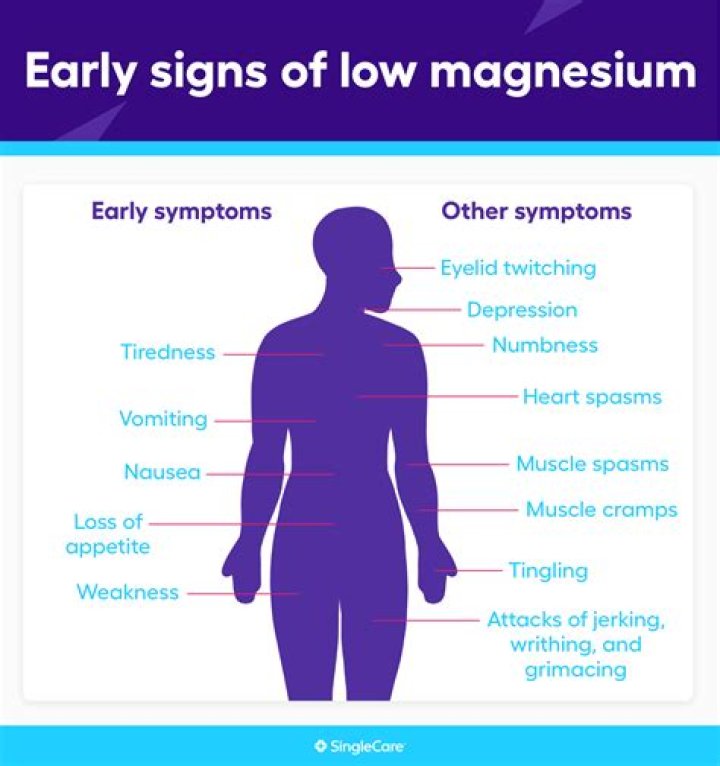
However, knowing the symptoms of a magnesium deficiency can help alert you to a need for testing. These are the seven low magnesium symptoms to look out for.
1. Fatigue
One of the most common symptoms of magnesium deficiency is severe fatigue. "Magnesium is a key part of energy production. Low levels mean less fuel for your body, causing fatigue," Scanlan explains.
However, he notes that "there are many, many things other than magnesium that can lead to fatigue, and not everyone who is fatigued has magnesium deficiency." If fatigue is your only symptom, your doctor may or may not test for magnesium deficiency.
2. Migraines
Having too little magnesium in your system can also cause neurological symptoms. "When magnesium levels are low, nerve cells can get overstimulated and result in migraines and other brain disorders," Scanlan tells Best Life.
According to the American Migraine Foundation, "Migraineurs have lower brain magnesium levels either from decreased absorption of it in food, a genetic tendency to low brain magnesium, or from excreting it from the body to a greater degree than non-migraineurs. Studies of migraineurs have found low levels of brain and spinal fluid magnesium in between migraine attacks," their experts say.
In fact, some doctors will recommend magnesium supplements as a means of preventing frequent migraines. "The most substantial evidence for magnesium's effectiveness is in patients who have or have had aura with their migraine. It is believed magnesium may prevent the wave of brain signaling, called cortical spreading depression, which produces the visual and sensory changes in the common forms of aura," experts from the foundation write.
"Other mechanisms of magnesium action include improved platelet function and decreased release or blocking of pain transmitting chemicals in the brain," they note.
3. Abnormal heart rhythms
One of the important functions of magnesium is that it helps to control blood vessel and heart muscle contraction. When your magnesium levels are low, you may experience cardiovascular changes as a result.
"We talk so much about keeping our hearts healthy, and magnesium helps our hearts maintain that healthy beat," says Landau. Without enough magnesium, you may notice an irregular heartbeat, also known as heart arrhythmia.
Some supplement companies claim that taking a magnesium supplement can help control high blood pressure. Though adequate magnesium levels do appear to be beneficial to the heart, Harvard Health Publishing notes that there is not enough conclusive evidence to say that supplements will improve blood pressure in humans.
4. Nausea and vomiting
Nausea and vomiting are also common symptoms of having low magnesium levels. "Your gut needs magnesium to work right. Not enough can upset your stomach," says Scanlan. Some people will also experience reduced appetite as a result of their nausea.
However, it's important to note that taking too much magnesium can also cause nausea, vomiting, and stomach upset. Testing can help you determine if your numbers are high or low.
5. Muscle cramps and weakness
Another symptom that could tip you off to a magnesium deficiency is muscle weakness. "Magnesium helps your nerves and muscles communicate. If they can't 'chat' with each other, you might feel weak," says Scanlan.
Muscle spasms, tremors, and cramps can also signal a problem. "Without enough magnesium, muscles can't relax properly, leading to cramps in the legs at night," Scanlan adds.
6. Impaired immune system
Your immune system may also suffer if you're getting or retaining inadequate levels of magnesium.
"Magnesium is known to support the immune system," says Landau. "In looking at animal models, animals that were low in magnesium developed more cancers. It is suspected that the impacted function of the immune system by being low in magnesium prevented the body from being able to detect and battle cancers. This makes maintaining a healthy balance of magnesium important for patients who have cancer and for patients who do not."
7. Numbness or tingling in the legs or hands
Because magnesium can affect nerve function, some people with low magnesium levels may also notice numbness or tingling in the legs, feet, face, or hands. However, the Cleveland Clinic notes that this typically occurs in cases of severe magnesium deficiency.
RELATED: 5 Signs You're Not Getting Enough Vitamin B12, Doctors Say.
How Common Are Magnesium Deficiencies?
Just how common are magnesium deficiencies? Though severe deficiencies are quite uncommon in otherwise healthy individuals, "some level of magnesium deficiency is likely more common than we realize," says Landau.
Scanlan adds that even mild to moderate deficiencies can still affect your health. "It's important to work with your health care team to monitor magnesium levels and address risk factors to help prevent and manage deficiencies," the pathologist says. "Early detection and intervention are key, as untreated magnesium deficiency can lead to serious health issues."
How Is Low Magnesium Treated?
There are several ways to treat low magnesium levels. Your first step after confirming a deficiency should be to add more magnesium to your diet. This can include leafy greens, nuts, seeds, whole grains, bananas, avocados, legumes, and other magnesium-rich foods.
Taking a magnesium supplement, including magnesium sulfate, citrate, oxide, or glycinate, can also help increase your levels if your doctor recommends it. However, it's important to note that magnesium supplements can lead to magnesium toxicity when taken in doses greater than 350 mg daily.
Symptoms of taking too much magnesium in the form of magnesium supplementation can include heart arrhythmia, low blood pressure, confusion, slowed breathing, coma, and even sudden cardiac death, the NIH warns.
Furthermore, your doctor will also want to monitor and treat any underlying conditions that could be causing your low magnesium levels. "If medications contribute to magnesium loss, dosage adjustments or alternatives can help," Scanlan notes.
"Treating low magnesium is all about balance and addressing the root cause. Individual treatment plans may vary depending on the severity of the deficiency and underlying health factors, so it's important that you consult with your healthcare professional for a treatment plan that is tailored to you," Scanlan adds.
Best Life offers the most up-to-date information from top experts, new research, and health agencies, but our content is not meant to be a substitute for professional guidance. When it comes to the medication you're taking or any other health questions you have, always consult your healthcare provider directly.
Lauren Gray Lauren Gray is a New York-based writer, editor, and consultant.Read moreFiled UnderHealth Advice • Health FactsSources referenced in this article- Source: NIH: Magnesium Fact Sheet for Health Professionals
- Source: NIH: Magnesium Fact Sheet for Consumers
- Source: American Migraine Foundation: Magnesium and Migraine
- Source: American Migraine Foundation: Integrative and Complementary Migraine Treatments
- Source: Harvard Health Publishing: Magnesium and blood pressure: What’s the evidence?
- Source: Cleveland Clinic: Signs You May Have a Magnesium Deficiency
8 Signs You're Not Getting Enough Iron
If you notice these symptoms, it's time to request a blood test.May 4, 20245 Signs You're Not Getting Enough Vitamin B12
Experts reveal what to look for if you're worried you're deficient in the vital nutrient.April 21, 20249 Supplements That Can Damage Your Stomach
Pain, gas, bloating, and inflammation? Your supplements could be to blame.May 7, 20247 Best Protein Supplements for Weight Loss
Increase your protein intake to shed pounds and build muscle.April 30, 20245 Supplements That Can Damage Your Liver
These common capsules could be a problem for one of your most vital organs.April 23, 20247 Supplements to Avoid on Weight-Loss Drugs
These dangerous combinations could put you in harm's way.April 18, 2024Never Buy Vitamins With These 3 Ingredients
Always check product labels for these red flags, she warns.February 14, 202421 Surprising Signs of a Vitamin Deficiency
Doctors and nutritionists share things to look for that might signal a lack of certain vitamins.October 20, 20236 Pros and Cons of Taking a Daily Multivitamin
Here's your handy guide to making the right decision for you.March 24, 20246 Supplements You Should Never Take Over 60
Some of these vitamins, minerals, and nutrients can cause health issues for seniors.April 9, 2024